



By Paul Ejime* Another International Day for the Remembrance of the Slave Trade and its Abolitionpassed almost quietly on...

The Centre for Community Law (CCL) is deeply saddened by the tragic death of thirty-seven (37) persons while in the custody of the Nigerian Security and Civil Defence Corps (NSCDC) in Niger State. The Centre extends its heartfelt condolences to the families, relatives, and communities affected by this devastating loss.
The circumstances surrounding these deaths are deeply disturbing. Of particular concern are the conflicting and rapidly changing explanations that have emerged regarding what led to the deaths.
The Centre acknowledges and welcomes the steps reportedly taken by the Nigeria State Government and the Federal Government of Nigeria to initiate investigations into the circumstances surrounding the deaths. While such action is necessary, the investigation must be capable of establishing the truth, identifying responsibility, and ensuring accountability. Swift, transparent, and credible action is essential to restoring public confidence and securing justice for the deceased and their families.
Accordingly, the Centre emphasises as follows:
- The investigation must be thorough, independent, transparent, and free from institutional interference. Its mandate and proceedings must be sufficiently robust to establish the facts and determine the circumstances and causes of the deaths.
- Where wrongdoing or negligence is established, all persons connected with the incident must be held accountable in accordance with Nigerian law and applicable international human rights standards.
- Custodial facilities and detention centres across Nigeria must urgently review and strengthen their protocols and conditions of detention to prevent a recurrence of such an avoidable loss of life.
- The Centre calls on civil society organisations, human rights institutions, and the international community to closely monitor the investigative process and to advocate for the protection of detainees and persons deprived of their liberty across Nigeria.
- The Centre remains committed to supporting initiatives that promote transparency, justice, accountability, and systemic reform within Nigeria’s custodial system.
- Every life lost in custody demands accountability. The State has a fundamental responsibility to safeguard the lives and dignity of persons in its custody. This tragedy must therefore become a catalyst for meaningful and far-reaching reform.
- The Centre is concerned by the recurring practice of establishing committees in response to grave incidents, while the reports of such committees are often not made public or are not effectively implemented. This pattern undermines public confidence and fails to address the systemic deficiencies that give rise to recurring tragedies. Investigations must therefore result in publicly accessible findings and concrete implementation of recommendations.
- The Centre rejects any attempt to assign blame prematurely. At this stage, competing narratives and blame-shifting risk obscuring the true causes of the incident and compromising the integrity of the investigative process. What is required is not speculation, but clarity, transparency, evidence, and accountability.
- The Centre notes, from the statement of the Niger State Government that at least five committees have been set up at different levels – the NSCDC, the DSS, the IGP, the Niger State Government and the Federal Government – and is deeply concern over the duplication of Committees.
- The Centre particularly notes the Federal Government Committee, chaired by Jonathan Kure, but rejects the establishment of another administrative committee as an adequate response to the gravity and circumstances of this incident.
- In light of the conflicting explanations already advanced, including the suggestion that overcrowding may have contributed to the deaths, the Centre considers that what is required is a judicial inquiry with the requisite independence, powers, and legal authority, rather than another administrative investigation.
- The Centre further considers this tragedy to be symptomatic of a broader and longstanding systemic problem within Nigeria’s custodial system. There must therefore be a comprehensive national probe of prisons, detention centres, and other custodial facilities across Nigeria, with a view to determining whether they are fit for human habitation and whether their conditions comply with constitutional guarantees and applicable international human rights standards.
- The probe must also unravel the length of time each and everyone of the deceased detainees had spent in the custody of the NSCDC before the occurrence of this tragic incident.
- The Centre recalls that in March 2026, the ECOWAS Community Court of Justice, in Centre for Community Law v. Federal Republic of Nigeria, Judgment No. ECW/CCJ/JUD/15/26, found, among others, evidence establishing that a considerable number of inmates were being held in overcrowded correctional facilities, with many remaining in such conditions for prolonged periods while awaiting trial.
- The Court declared, among others, the continued detention of persons in overcrowded correctional facilities places Nigeria in violated the right to dignity inherent in the human person, contrary to Article 5 of the African Charter on Human and People’s Rights.
- The Centre is of the firm view that this tragedy might, perhaps, have been averted had Nigeria implemented the ECOWAS Court’s decision in a timely and effective manner. The failure to act in accordance with its international obligations for respect for human rights has once again resulted in avoidable loss of life.
- We therefore call on the Federal Republic of Nigeria to take all necessary steps to implement this judgment and immediately audit the custodian and detention facilities across the country. This audit must identify facilities that exceed their carrying capacity and prioritise the protection of the welfare, safety, and dignity of inmates in accordance with constitutional and international human rights standards.
- The Centre therefore calls on the Federal Government of Nigeria, the National Human Rights Commission, civil society organisations, and Nigeria’s international partners to support the establishment of a judicial commission of inquiry with sufficient independence and powers to summon witnesses, obtain and examine relevant records, inspect custodial facilities, receive expert evidence, determine the circumstances and causes of the deaths, identify responsibility where appropriate, and make legally actionable recommendations.
Nigeria must seize this moment to confront, honestly and comprehensively, the systemic failures within its custodial system. The deaths of these thirty-seven persons must not be reduced to another statistic or followed by another investigation whose findings are neither published nor implemented.
The lives lost must not be in vain. Nigeria must act now to ensure that every person deprived of liberty is treated with dignity, protected from avoidable harm, and afforded the rights guaranteed by the Constitution and international human rights law.
CENTRE FOR COMMUNITY LAW
Related Posts
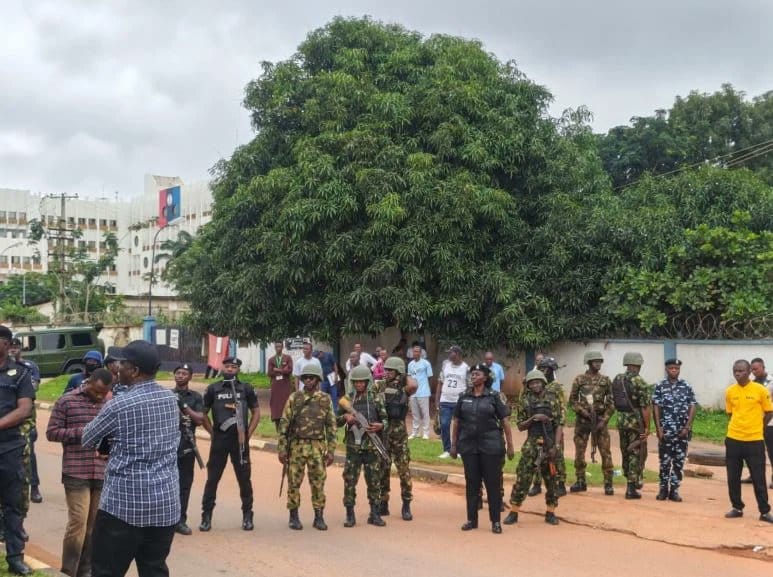
Retired military personnel gathered in Abuja on Wednesday, August 19, to demand the implementation of consequential adjustments to their...
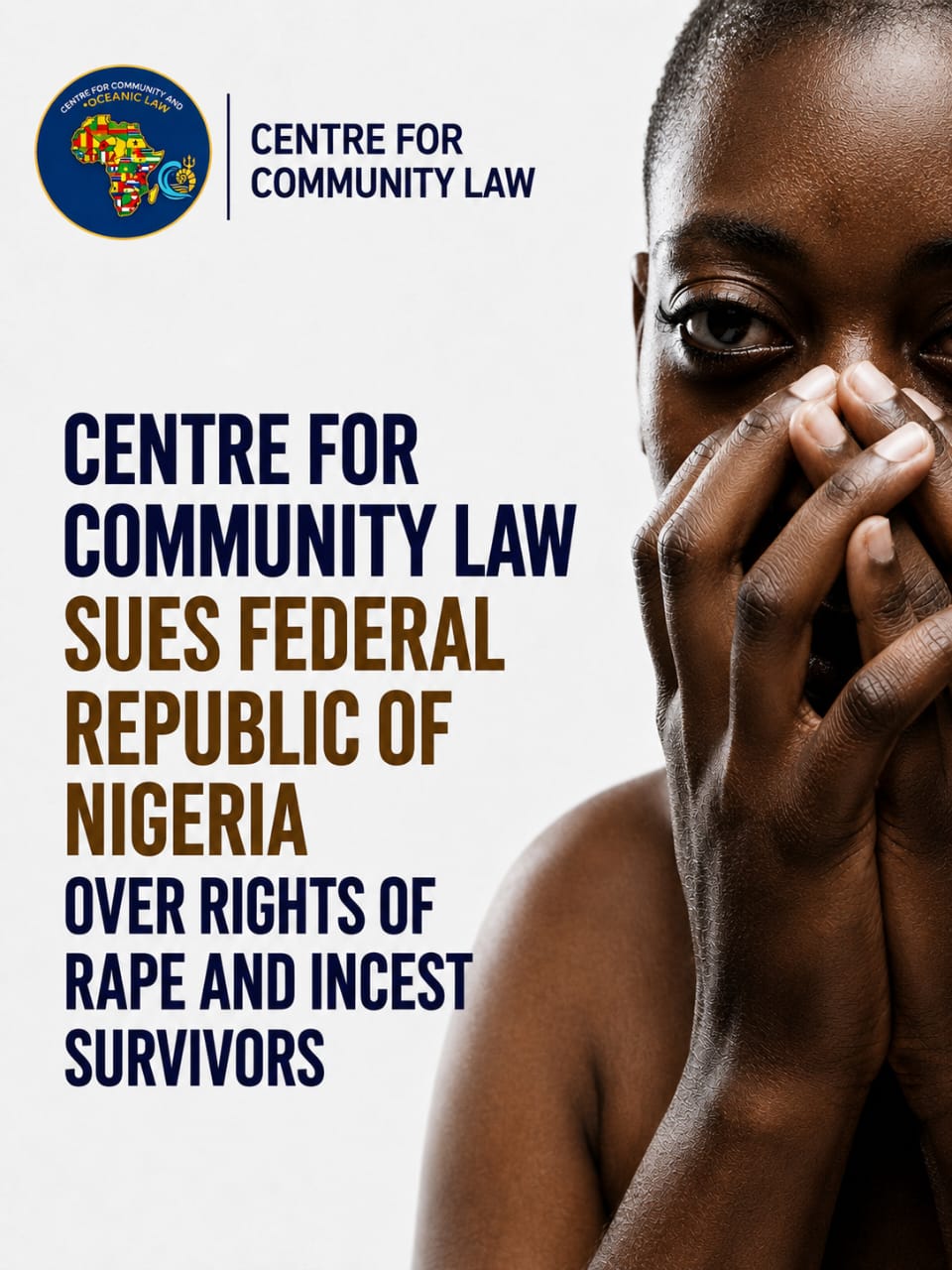
By Michael C. Agbo* The Board of Trustees of the Centre for Community Law has instituted a public-interest human...