The Incorporated Trustees of the Centre for Community Law (CFCOMLAW) has filed a groundbreaking human‑rights action before the Community...

By Michael C. Agbo*
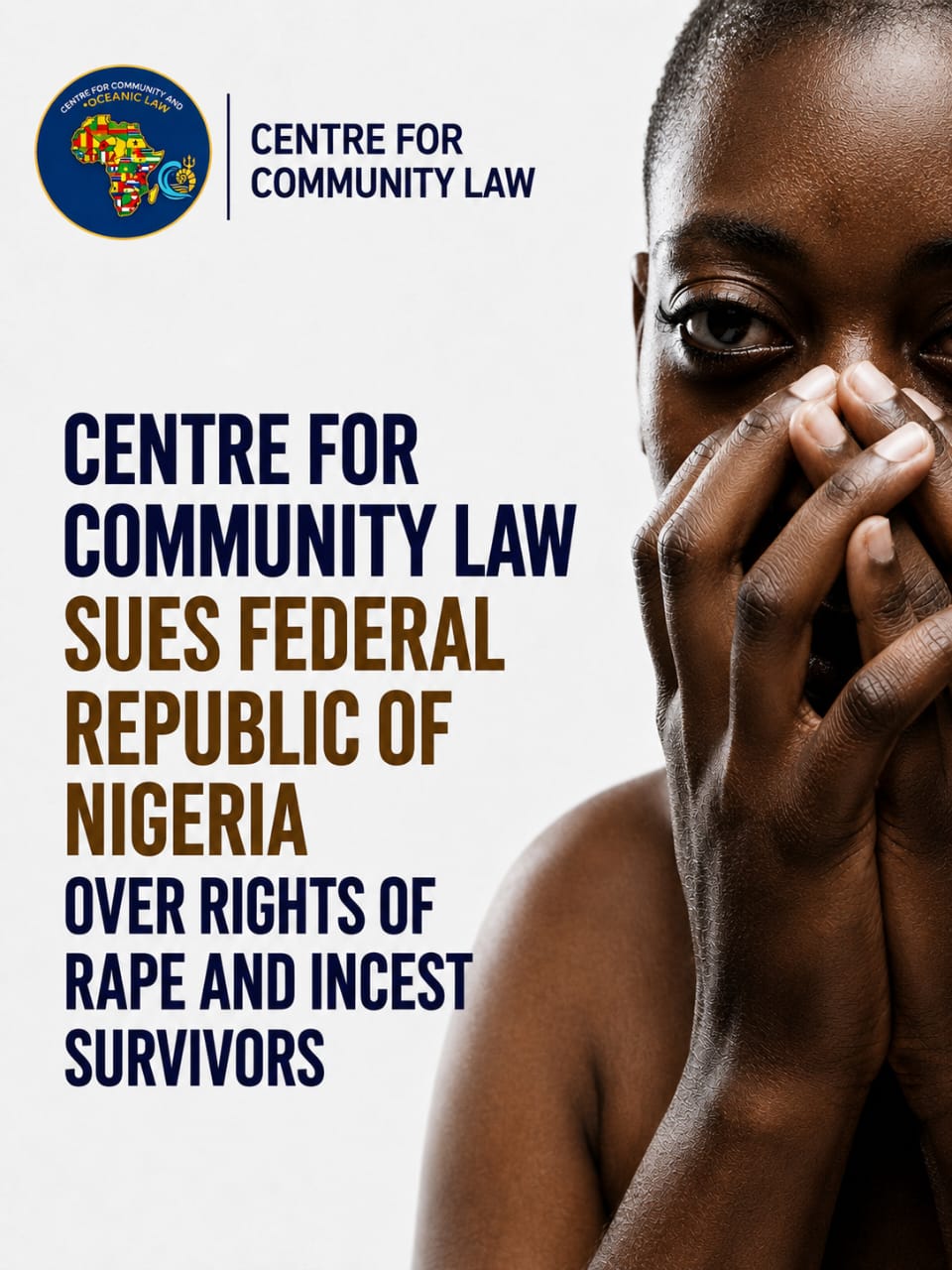
The Board of Trustees of the Centre for Community Law has instituted a public-interest human rights action before the High Court in Abuja against the Federal Republic of Nigeria, seeking judicial determination of constitutional and human rights questions concerning the treatment of women and girls who become pregnant from rape or incest under existing laws in the country.
The Centre, in suit *No. FHC/ABJ/CS/1695/2026* contends that compelling survivors of rape and incest to continue with pregnancies resulting from their abuse raises serious constitutional, human rights and public health concerns.
The suit urges the High Court to take into account provisions of Sections 34 and 37 of the Constitution of the Federal Republic of Nigeria, 1999 (as amended); Articles 4 and 5 of the African Charter on Human and Peoples’ Rights, and other applicable international human rights instruments to determine the extent of the protection available to survivors of sexual violence.
In a supporting affidavit, the Centre deposed to 37 instances of rape involving girls between the ages of three and 18, with some of them aged 12 to 13 becoming pregnant as a result.
It argues that “rape and incest constitute grave violations of victims’ bodily integrity, dignity, autonomy, and freedom from cruel, inhuman, and degrading treatment.”
The suit further questions whether “a survivor of rape or incest can, in law, be presumed to have consented to the consequences of such acts, including pregnancy and parenthood.”
The Centre challenges the “compatibility of certain provisions of the Criminal and Penal Codes with constitutional guarantees of dignity, privacy, family life, and bodily autonomy, particularly where such provisions operate to compel survivors of rape and incest to continue with pregnancies resulting from those crimes.”
Some of the reliefs being sought include “declarations affirming the rights of rape and incest survivors under the Constitution and the African Charter,” as well as “an order directing the Nigerian Government to take practical measures to ensure access to appropriate reproductive health services, medical care, counseling, and other “support mechanisms for victims of rape and incest in accordance with the country’s obligations under national and international laws.”
The suit did not name any specific individual survivor or seek monetary compensation. Rather, “it is a public interest action aimed at obtaining judicial clarification on the constitutional and human rights implications of existing laws affecting women and girls, who become pregnant through rape or incest.
The Centre said its action was necessitated by the prevalence of rape and sexual violence in Nigeria, particularly against minors, and the need to secure effective legal protection for survivors, while ensuring Nigeria’s compliance with its constitutional and international human rights obligations.
The Benin City-based Centre promotes and protects the rights of ECOWAS citizens and the rule of law within the community.
It has handled several human rights cases pro bono before Nigerian courts and the ECOWAS Court of Justice, to demonstrate its commitment to advancing access to justice, protecting vulnerable persons, and promoting the rule of law through legal aid, strategic litigation, research, and policy advocacy.
The High Court has yet to fix a date to hear the Centre’s latest suit.
Michael is a practising lawyer and Director of Policy and Planning, Centre for Community Law
Related Posts
The Incorporated Trustees of the Centre for Community Law (CFCOMLAW) has commenced a public interest human rights action against...
By Paul Ejime Thedeath of 37 suspected illegal miners, mainly youths in the detention facility of Nigeria’s Civil Defence...