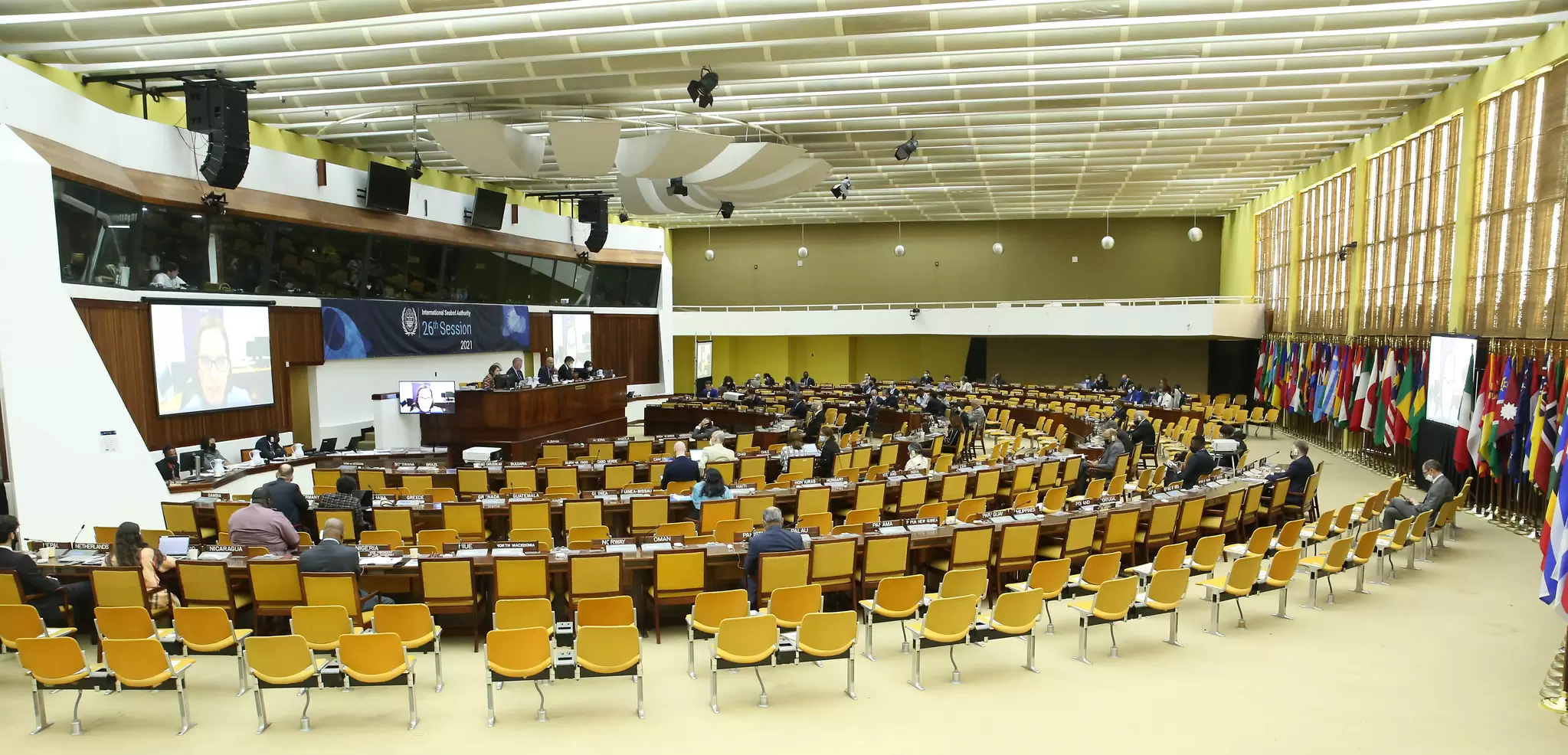

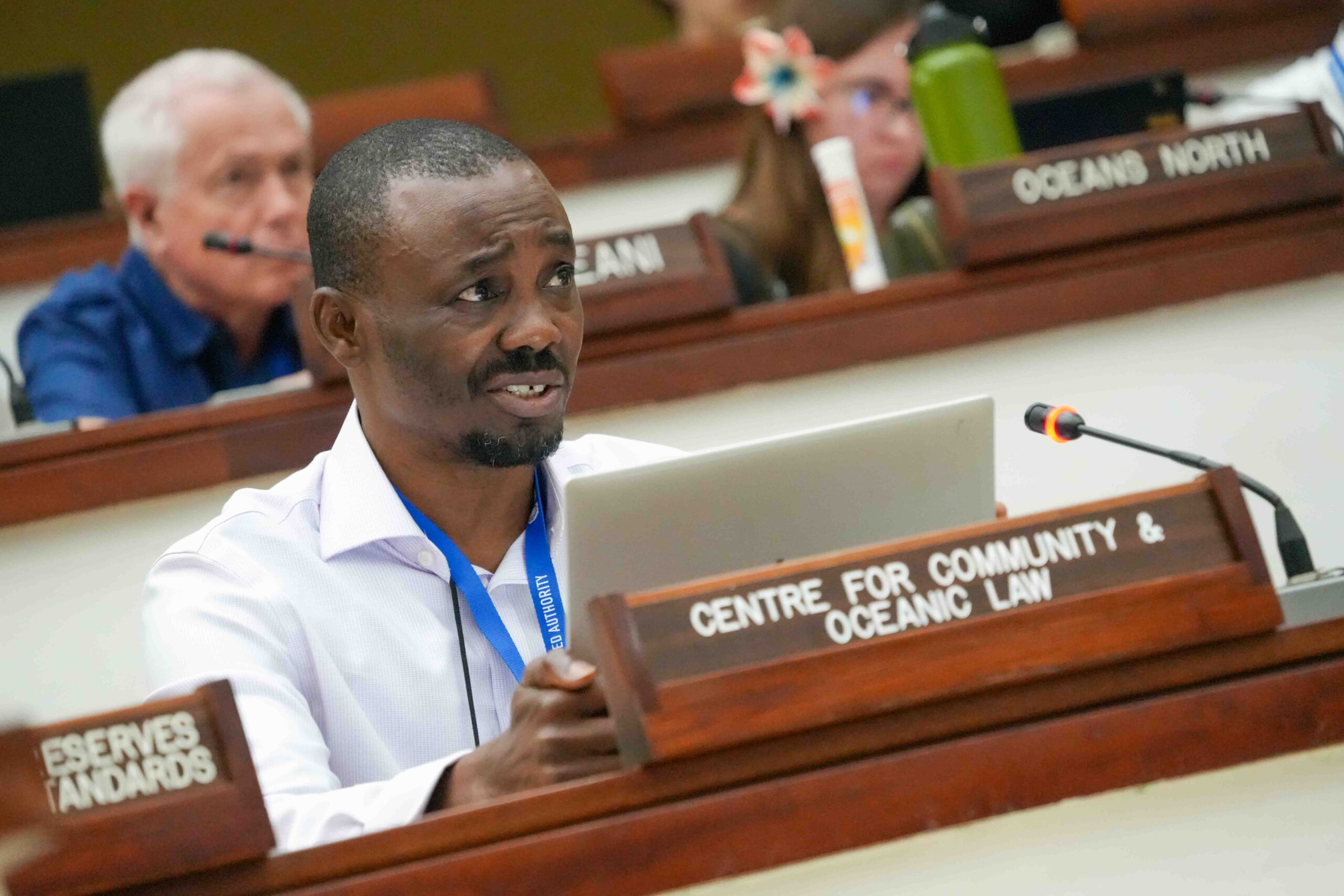
ISA 31st Session, Part II Council and Assembly July 2026 ISA HQ, Kingston, Jamaica. Delivered on 29 July 2026...

ISA 31st Session, Part II Council and Assembly July 2026 ISA HQ, Kingston, JamaicaDelivered on 30 July 2026 – Item 17: Consideration of a request for an advisory opinion from the Seabed Disputes Chamber of the International Tribunal for the Law of the Sea pursuant to article 191 of the Convention on matters relating to the legal implications for the International Seabed Authority of activities in the Area undertaken by non-States Parties
Thank you, Mr President, for giving us the floor.
Mr President, my delegation wishes to congratulate you and the Vice-Presidents on your election. We extend our best wishes for a successful tenure. We also thank the outgoing President and Vice-Presidents for their dedication and valuable contributions. My delegation further expresses its gratitude to Jamaica for graciously hosting us.
My delegation is grateful to Madam Secretary‑General for the decision to seek legal clarity on these important matters.
My delegation notes paragraph 2 of ISBA/31/A/8 and expresses concern regarding the manner in which questions have been framed. For the sake of time, we would focus only on question (a) in the annex. It states, and I quote:
“Has the principle of non-appropriation of the Area and its resources embodied in article 137 (1) of the United Nations Convention on the Law of the Sea acquired the status of customary international law?”
We are concerned that this question appears to fall outside the institutional mandate of the Authority, the scope and legitimacy of which are grounded in the Convention itself, rather than in the broader domain of customary international law.
It is our understanding that, the competence of the Assembly being institutional rather than universal, it is not empowered to request an opinion on the matters identified below, which the first question appears to invite:
- the general international obligations of non‑parties,
- the customary status of rules outside the institutional functioning of the Authority.
It seems to my delegation that a question that appears to determine the customary international law obligations of non‑parties may exceed the proper scope.
Upon the circulation of this draft decision, we undertook a review of prior requests for advisory opinions that we believe share certain characteristics with the present one. We found none that was premised on a legal basis situated outside a relevant governing framework in the manner this question appears to be.
My delegation, however, identified one instance that we believe may be instructive: the Nuclear Weapons Advisory Opinion request before the International Court of Justice (ICJ), in which the question posed by the UNGA was, “Is the threat or use of nuclear weapons in any circumstance permitted under international law?”
Drawing from this, if the Assembly, decides to proceed, we would suggest that the question be reformulated to read: “Is the appropriation of the Area and its resources in any circumstance permitted under international law?” In our view, such a formulation would allow the Chamber to engage with the full spectrum of international law, including customary international law in a manner that is not focused on non-parties.
To be absolutely clear, your excellencies, my delegation is not concerned that the Chamber would decline the request; indeed, it may well render the opinion notwithstanding the questions seeming attempt to determine the obligation of non‑party States, given the jurisprudence of the International Court of Justice on this point.
Our concern lies elsewhere: namely, how even a positive finding on that question or the entire draft questions would advance the work of the Authority in relation to a non‑party States, which may well assert the status of persistent objector – a question the Chamber would be unable to address in the absence of the non‑party State itself, as the determination of persistent objection is inherently fact‑specific and can only be made on an individual basis, in our view.
On the whole, we are firmly of the view that, if this request is made and the opinion is rendered, such is unlikely to achieve its intended purpose and carries the risks of generating unintended but foreseeable complications.
We would therefore urge the Authority to continue to pursue diplomatic solutions as the Convention steadily advances toward universality. In this regard, my delegation joins the Secretary‑General in welcoming Cambodia and Kyrgyzstan into its fold.
We therefore join the call for the deferment of this agenda item.
I thank you.
Related Posts

By Marc Weller* International law does not permit any country to appoint itself ‘guardian’ of other states’ rights and...