
Centre for Community Law Joins Global Observance of the 2026 International Day of the Deep Seabed
Theme: “1,000 Reasons to: Discover. Share. Use.”
1 November 2026 –Abuja, Nigeria / United Kingdom
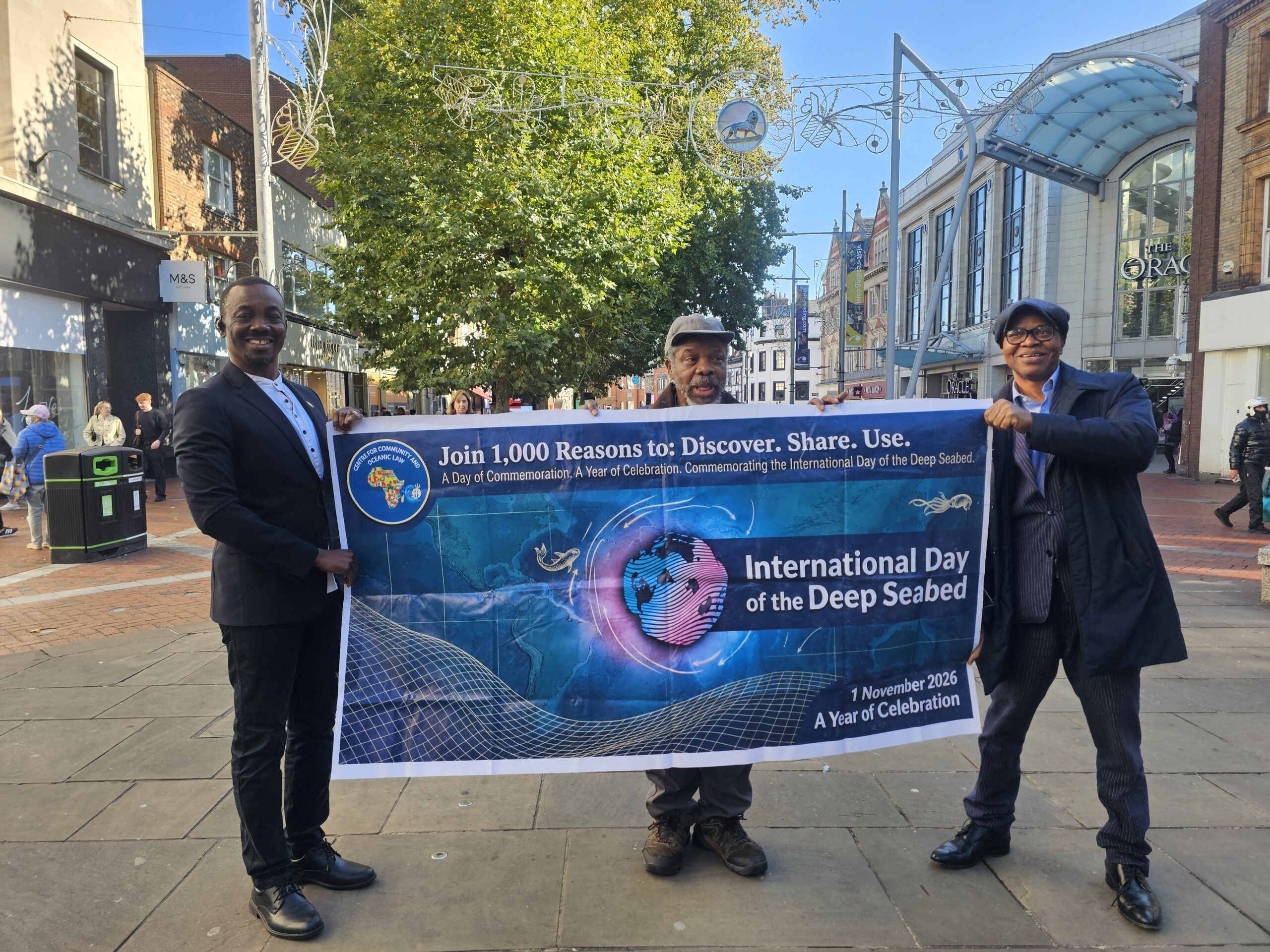
The Centre for Community Law (CFCOMLAW) proudly announces its participation in the 2026 International Day of the Deep Seabed on 1 November under the theme “1,000 Reasons to: Discover. Share. Use.” We join the rest of the world to highlight the importance of the seabed beyond national jurisdiction.
Proclaimed by the Assembly of the International Seabed Authority (ISA) in 2025, (Decision ISBA/30/A/13), the International Day of the Deep Seabed highlights the importance of the seabed beyond national jurisdiction – the common heritage of humankind. The 2026 theme underscores the global commitment to expanding scientific knowledge of deep‑sea biodiversity, strengthening international cooperation, and ensuring that research informs responsible stewardship of the Area.
ABOUT THE DAY
In July 2025, the ISA Assembly proclaimed 1 November as the International Day of the Deep Seabed.
Proposed by the Governments of Fiji, Jamaica, Malta and Singapore, the date commemorates Arvid Pardo’s historic 1967 speech before the UN General Assembly and celebrates the enduring spirit of multilateral cooperation that defines the Law of the Sea. The International Day of the Deep Seabed celebrates a balance between innovation and stewardship, and managing, protecting, and wisely using the resources of the deep seabed.
DISCOVER:
Improves our understanding of deep-seabed biodiversity and describe life on the seabed.
SHARE:
Makes data, samples, tools, knowledge and expertise more accessible and useful. USE Apply science and capacity to strengthen environmental assessment, management and informed decision-making. Together, these steps connect scientific discovery with responsible stewardship of the Area.
Revealing the Biodiversity of the Deep Seabed Knowledge of deep-seabed biodiversity continues to expand through research undertaken by scientific institutions, ISA contractors, international partners and individual experts. Yet, much remains to be discovered. The One Thousand Reasons campaign, implemented through SSKI, supports taxonomic research towards the ambition of describing at least 1,000 new deep-sea species by 2030.
Taxonomy, the science of identifying, describing and naming species, transforms newly documented biodiversity into standardized scientific knowledge that can be shared and used. Before ecosystems can be assessed, monitored or managed effectively, the organisms within them need to be identified consistently and linked to reliable scientific information. Describing and naming species therefore turns individual observations and specimens into knowledge that can be compared, shared and used over time. Deep-sea discovery is a collaborative process.
Research institutions, exploration contractors, independent experts and citizen scientists can all contribute specimens, observations and expertise, expanding both the geographic reach and the scientific capacity available to understand the deep seabed. Every species described helps reveal more about how deep-sea ecosystems are structured and function.
SHARE Turning Discovery into Shared Knowledge Scientific knowledge creates greater value when it can be accessed, connected and used. SSKI helps strengthen the infrastructure that allows biodiversity information to move from individual discoveries into the wider global knowledge system. This includes connecting digital databases, curated collections and standardized scientific nomenclature so that biodiversity information is more accessible, comparable and interoperable.
Sharing also means Sharing Capacity SSKI supports scientists, particularly from developing States, through training, mentorship, workshops, internships, research opportunities and international collaboration. These activities strengthen scientific networks, develop future trainers and help build lasting institutional capability. This is particularly important for scientists and institutions in developing States. Expanding access to data, collections, training and international scientific networks helps broaden participation in deep-sea research and strengthens the ability of more countries to generate, interpret and use scientific knowledge. Samples, data, expertise and knowledge can therefore travel further — supporting scientists and decisionmakers well beyond the place where they were first collected. Sharing knowledge means sharing data, samples, tools, expertise and opportunity. Discoveries become more powerful when knowledge is shared.
From Knowledge to Informed Decisions Scientific discovery is not the end of the process. The science-policy interface helps translate biodiversity knowledge into the evidence needed for environmental assessment, management and regulatory decision-making. Better understanding of biodiversity and ecosystem functioning helps decision makers identify environmental risks, establish baselines and thresholds, develop regional approaches and strengthen the scientific basis for the effective protection of the marine environment. Scientific knowledge also helps identify where uncertainty remains. Continuous research, environmental monitoring and improved observation technologies allow the evidence base to evolve over time, helping decision-makers refine approaches as new information becomes available. Better science can also support better technology. Improved understanding of species, ecosystem functions and potential pressures can help stimulate innovation aimed at reducing environmental impacts and strengthening monitoring and environmental performance. Scientific knowledge can also support innovation. Improved understanding of ecosystems and potential impacts can help stimulate technological development and approaches designed to reduce environmental harm. ISA’s work on environmental baselines and thresholds, regional environmental planning and DeepData reflects this connection between scientific knowledge and practical governance. Science does not determine policy choices on its own, but it helps ensure that those choices are informed by the best available evidence.
DISCOVER what lives there.
SHARE what we learn.
USE knowledge to inform better decisions.
CCL’s Commitment to Deep‑Sea Knowledge and Ocean Governance
As an NGO engaged in regional governance and ocean sustainability, the Centre for Community Law aligns its programmes with the ISA’s Sustainable Seabed Knowledge Initiative (SSKI) and the One Thousand Reasons Campaign, which conceived to support the identification and description of 1,000 new deep‑sea species by 2030.
Centre for Community Law reaffirmed its commitment:
The deep seabed belongs to all humanity. Our responsibility is to ensure that scientific discovery, data sharing, technology transfer and evidence‑based regulation guide every decision affecting this fragile and globally significant environment.
Key Focus Areas for 2026
CCL will mark the International Day of the Deep Seabed through a series of activities across Nigeria, the Liberia and Cote d’Ivoire, and online platforms, including:
- Youth Engagement Sessions on ocean literacy, SDG 14, and the legal regime of the Area.
- Policy Dialogues with academic institutions and civil society partners on equitable participation in marine scientific research.
- Commemorative Walks highlighting the need to protect biodiversity in the ocean,linking plastic pollution, coastal degradation, and deep‑sea ecosystem health.
- Research Briefs and Advocacy Notes supporting African engagement in ISA processes and capacity‑building programmes.
Advancing Africa’s Voice in Global Ocean Governance
CCL continues to champion inclusive participation of African States, researchers, and communities in deep‑sea governance. Through its advocacy and enlightenment events, regional partnerships, and environmental campaigns, the Centre is strengthening the continent’s role in shaping the future of the Area and ensuring that the benefits of the common heritage principle are realised equitably.
About the Centre for Community Law
The Centre for Community Law (CFCOMLAW) is a non‑governmental organisation dedicated to advancing community rights, environmental justice, regional integration, and sustainable development across West Africa. CCL provides legal aid, conducts research, and leads advocacy initiatives in partnership with academic institutions, civil society organisations, and regional bodies.
For Media Enquiries
Centre for Community Law Email: info@cfcomlaw.com Phone: +234 (0) 7045477915.
Related Posts

The International Tribunal for the Law of the Sea (ITLOS) is one of the dispute settlement mechanisms of the...