In its 50 years of existence, the Economic Community of West African States (ECOWAS) faces an unprecedented crisis. The ECOWAS Commission is fractured by internal in‑fighting under the leadership of a seemingly inept President, Dr. Oumar Alieu Touray, while the Council of Ministers routinely sidelines ECOWAS laws in favour of personal and political whims. This dysfunction has coincided with the mass exit of member states and a contagious wave of democratic backsliding, leaving the regional body weakened and its founding vision of integration and collective progress in jeopardy.
Since the inception of the present ECOWAS Commission, a troubling pattern has emerged that exposes the hypocrisy of the regional body at multiple levels. The region’s descent into dictatorship, evidenced by the spate of recent coups, is directly traceable to the Commission’s ineptitude and its failure to uphold democratic norms. This dysfunction is further exemplified by the dictatorial tendencies of the President, whose antecedents align disturbingly with the illegalities and disregard for law that the Commission has now come to embody. What was once envisioned as a guardian of integration and democracy has instead become a symbol of institutional weakness and authoritarian drift.
The ineptitude of the Commission is evident not only in the actions and responses of Member State governments but also in the growing estrangement of citizens from ECOWAS itself. A survey conducted by our Centre to mark the 50th anniversary of ECOWAS revealed a profound disconnect between the people (whose interests it claims to serve) and the Community. The much‑touted “ECOWAS of People” has been reduced to a hollow slogan, failing to resonate with its citizens who see little tangible benefit or accountability in the operations of ECOWAS. This widening gap underscores the erosion of legitimacy and trust, leaving ECOWAS increasingly perceived as an elite project rather than a people‑centered community.
The present ECOWAS Commission has come to embody civilian dictatorship, presiding over the steady shrinking of democratic space and responding only when citizens rise in protest to demand their rights. In such a climate of betrayal, it is little wonder that citizens of member states, however reluctantly, celebrate military interregnums as a form of salvation from arbitrariness. In recent years, we have witnessed gross violations of the constitutional convergence principles enshrined in Protocol A/SP1/12/01 on Democracy and Good Governance—supplementary to the Mechanism for Conflict Prevention, Management, Resolution, Peacekeeping and Security. Member State governments have manipulated constitutions, subverted state institutions, and suppressed popular will in their determination to retain power. Obvious examples are Togo, Cote d’Iviore, Benin, and Senegal but for the democratic consciousness of the Senegalese to whom we pay tribute. These actions not only erode democratic legitimacy but also expose ECOWAS’s failure to uphold its own foundational commitments.
This is not an isolated view. Thankfully, it has been even more powerfully articulated by the Socialist Movement of Ghana (SMG), whose recent statement captures the depth of ECOWAS’s crisis. In their release, the SMG underscored how the regional body has abandoned its founding principles, exposing its hypocrisy and complicity in the shrinking of democratic space across West Africa. Their analysis reinforces our own findings, highlighting that ECOWAS has become increasingly detached from the people it claims to serve, while enabling authoritarian tendencies among Member States.
Nothing, in our view, has more clearly exposed the ineptitude of the present Commission (and the narrow national and self‑interest served by its President) than the mishandling of the exit of the AES States from ECOWAS. One would have expected a forthright and proactive Commission, capable of properly advising the Council of Ministers and the Authority, and, in line with Article 19(2) and (3) of the Revised Treaty of 1993 (as amended), taking the lead in diplomatic efforts to avert what has become the gravest occurrence in ECOWAS’s history. Instead, the Commission failed in its duty, and this failure directly contributed to the chain of events that culminated in the withdrawal of three member States, and the resultant strained relationship between the ECOWAS and AES.
Worse still, the President of the Commission failed to take concrete steps to advise on the consequential measures necessary to secure the rights of ECOWAS citizens within the three exited states or to negotiate cooperation agreements before the expiry of the one‑year notice period given by those states. This abdication of responsibility represents a grave dereliction of duty under the Revised Treaty and further underscores the Commission’s institutional weakness. In light of this failure, our Centre initiated proceedings before the ECOWAS Court of Justice in ECW/CCJ/APP/09/25 — The Centre for Community Law v. The Authority of Heads of State and Government of ECOWAS & 13 Others.
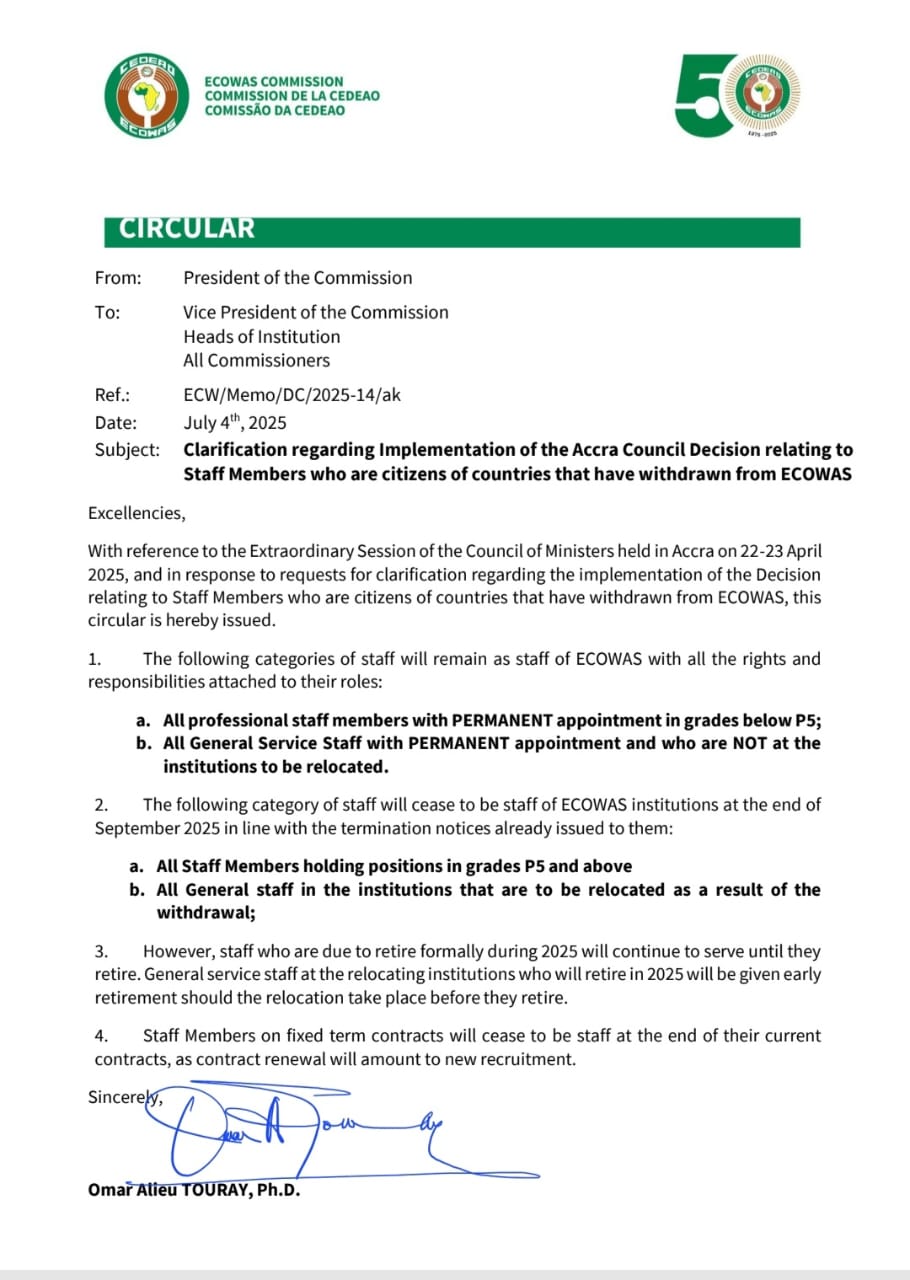
Rather than prioritising the wider interests of ordinary ECOWAS citizens, the President of the Commission has been preoccupied with protecting narrow, self‑serving agendas. In direct contravention of the clear provisions of the Revised Treaty and the ECOWAS Staff Regulations, the President issued the below controversial memo that not only disregarded institutional norms but also displayed open hostility toward the ECOWAS Community itself by seeking to permanently retain staff members from the exited states in the ECOWAS.
It ultimately took the intervention of our Centre, through an application before the ECOWAS Court of Justice in ECW/CCJ/APP/47/25 — David Aguele & Anor. v. Council of Ministers of ECOWAS & Anor, challenging the legality of the President’s controversial memo, for the President to reverse himself by issuing a subsequent memorandum.
This reversal, compelled by judicial scrutiny rather than institutional accountability, underscores the Commission’s disregard for its own legal framework and the extent to which corrective action now depends on external pressure rather than principled leadership.
Not surprisingly, the dysfunctionality of the Commission under the leadership of Dr. Oumar Alieu Touray has taken a new and troubling dimension in a matter also closely linked to the exit of the AES states. For the first time in the history of ECOWAS, a serving Commissioner has sued the Commission before the ECOWAS Court of Justice, as seen in ECW/CCJ/APP/54/25 — Prof. Nazifi Abdullahi Darma v. The President of the ECOWAS Commission. This unprecedented development underscores the depth of institutional breakdown within ECOWAS, revealing not only internal fractures but also the erosion of confidence in its leadership and governance structures
Our Centre gathered from documents filed before the ECOWAS Court that, following the exit of Niger, Mr. Sediko Douka—a citizen of Niger—ceased to hold the office of Commissioner on 30 September 2025. In response, rather than pursuing a transparent and treaty‑compliant process, the President of the Commission unilaterally imposed his personal appointee from The Gambia, Mr. Abdul Kolley, to assume Mr. Douka’s position of a statutory appointee. This action, appearing to serve personal interests rather than the collective good of ECOWAS, further illustrates the Commission’s disregard for institutional norms and its deepening crisis of legitimacy.
Documents reveal that Prof. Nazifi Abdullahi Darma’s challenge to the illegality of the President’s actions resulted in direct victimisation. In retaliation, the President purportedly revoked the powers of Prof. Darma, who was serving as Commissioner in charge of International Services.
This act of reprisal not only undermines the independence of ECOWAS Commissioners but also signals a disturbing trend of silencing dissent within the institution. Such measures erode the credibility of the Commission, weaken its governance structures, and reinforce the perception of authoritarian control at the highest levels of ECOWAS leadership.
In response to Prof. Nazifi Abdullahi Darma’s prompt challenge of the President’s authority before the ECOWAS Court of Justice, the Court delivered a preliminary ruling on 10 December 2025. While it refused to grant the Applicant’s request for provisional measures and an expedited hearing, the Court nevertheless held—contrary to the vehement objections of the President of the Commission—that it possesses jurisdiction to hear the matter. This ruling is significant, as it affirms the Court’s authority to adjudicate disputes, distinguishing the case from the previous cases where the court refused to hear a case on the ground of non-exhaustion of the mechanisms in the staff regulations. The case therefore sets a new precedent.
Notwithstanding the pendency of the case—and despite this being formally communicated to the Council of Ministers—the President of the Commission, acting in concert with the Council, proceeded to remove the Applicant from office and immediately swear in a successor. This action stands in direct violation of article 23(2) of the Protocol of the Court, which provides that: “When a dispute is brought before the Court, Member States or Institutions of the Community shall refrain from any action likely to aggravate or militate against its settlement.”
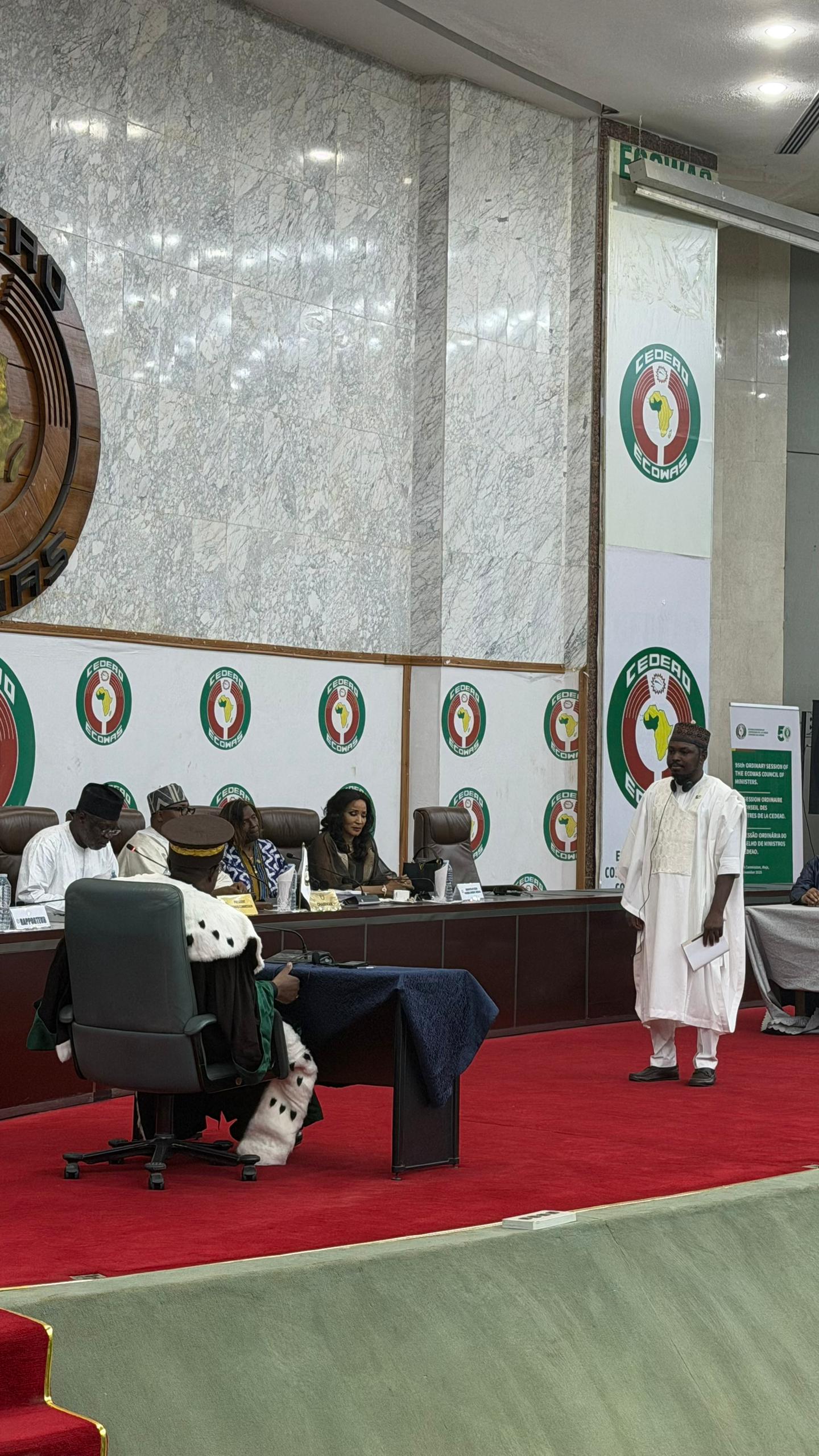
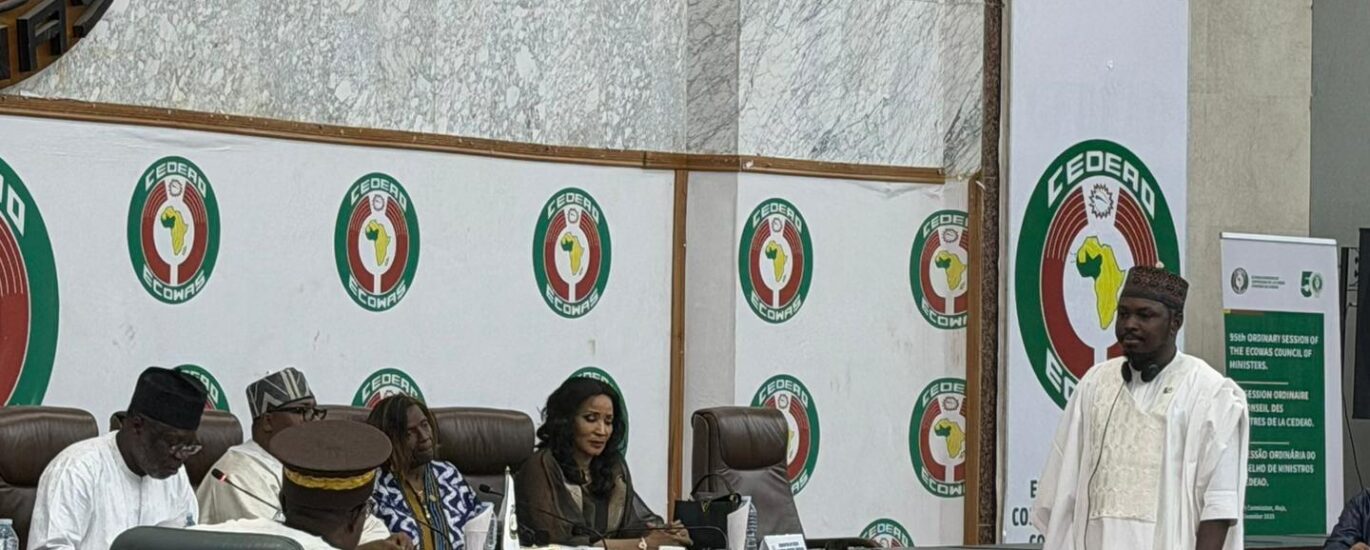
The most troubling aspect of this episode is that the swearing‑in of the successor was conducted by none other than the President of the Court, who is presiding over the very case brought by Prof. Nazifi Abdullahi Darma. This raises profound questions about judicial propriety, institutional integrity, and the erosion of confidence in ECOWAS’s governance and dispute‑resolution mechanisms.
This authoritarianism and blatant disregard for the rule of law is precisely why ECOWAS Protocols denounce military regimes—yet paradoxically, it is the very practice the institution now indulges in as a matter of policy. By undermining its own normative framework, ECOWAS erodes both its credibility and its moral authority in the region. Perhaps the time has come for ECOWAS to engage in genuine introspection, confront its authoritarian drift, and take deliberate steps to restore adherence to democratic principles and the rule of law. Only through such reform can the Community reclaim its legitimacy and fulfill its founding vision of integration, solidarity, and people‑centered governance.